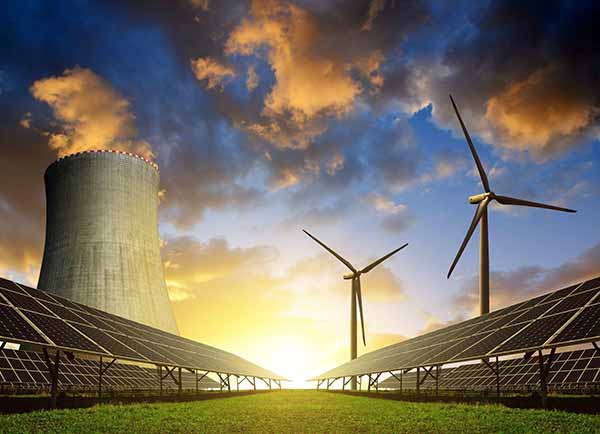
The world’s electricity story over the past five years has transformed from one of slow recovery to one of total reinvention. After the pandemic induced slowdown, global power demand surged by 2.5% in 2023 and 4.3% in 2024, driven by rising electrification across transport, manufacturing and digital infrastructure. The good news is that in 2024, low-carbon sources supplied nearly 40% of the world’s electricity for the first time, with solar and wind contributing the bulk of new capacity.
The demand side has been reshaped by two big forces: digitalisation and electrification. Data-centres and AI training clusters have become material consumers of power, especially in the US, Europe and Asia’s technology hubs. The International Energy Agency (IEA) estimates global data-centre electricity use will double by 2030. Add to that the rapid spread of electric vehicles, cooling loads from climate change and the surge in EV and battery manufacturing and we have a very different energy demand profile than five years ago. A single LLM query, for instance, is estimated to use 10-100x more energy than a browser search. While training large language models was energy intensive, now answering billions of queries on LLMs accounts for a chunk of power use.
Global electricity demand in 2025 is estimated to be 32,000 Terawatt Hours, about 40% higher than 2020. Asia remains the engine room for demand. China and India account for over half of global electricity consumption and will generate 85% of new demand over the next five years. The US is seeing 2% annual growth, driven less by population and more by digital power demand. Europe’s growth is modest and is offset by energy efficiency. Latin America and Africa are smaller in absolute size but will post the highest percentage growth rates as electrification expands.
On the supply side, the world is racing to keep up. 2024 saw a record ~700 GW of new renewable capacity set up of which nearly 80% was solar. Wind contributed about 8% of global generation, solar 7%, hydro 14% and nuclear 9%. In the next five years, renewables will add more than 80% of incremental generation, with solar overtaking wind by 2027. Nuclear’s contribution should inch up as new builds come online. In the US there have been some big power deals, as big tech is no longer a passive buyer of grid power and is proactively contracting and funding assets in hydro, nuclear and renewables with multibillion, long term deals.
The main challenge though isn’t generation but connection. Transmission bottlenecks, transformer shortages and local permission delays are becoming chokepoints. Even as the world adds capacity, certain regions could face localized tightness where demand outpaces grid upgrades.
The next five years will probably not just be about adding megawatts as smart grids, real time pricing and storage will reshape how power flows and is valued. Electricity is evolving from a simple utility into the nervous system of the modern economy.
Read More – The Five Life Currencies