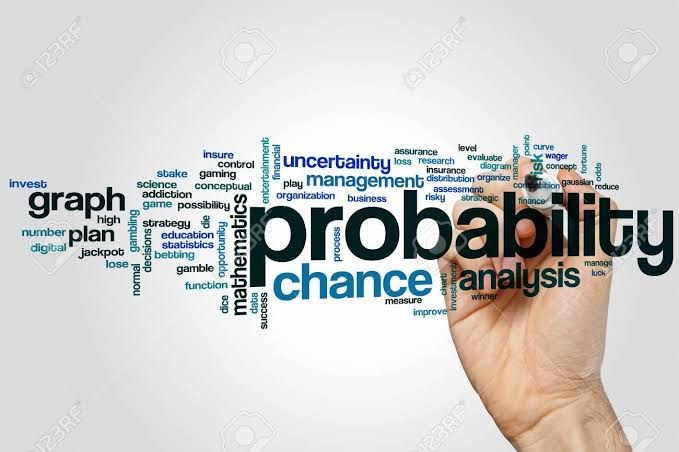
We often think of probability as a classroom subject. But in reality, probability shapes almost every choice we make. What’s interesting is how our minds misinterpret odds, leading to biases that behavioural economists have studied for decades. Behavioural economics reminds us that humans are not natural statisticians. We overweight rare events, underweight common ones and let emotions cloud our judgement.
Here are a few examples of how probability works in everyday life:
Shuffling Music Playlists: Streaming apps use probability algorithms to “shuffle” songs. If it were purely random, you might hear the same artist three times in a row. So, the shuffle algo tweaks the randomness, managing probabilities so it sounds random to us.
The Birthday Paradox: In a group of just 23 people, there’s a 50% chance two share a birthday. In 70 people, the probability jumps to 99%. It’s completely unintuitive, but explains why coincidences – like meeting someone with your birthday – feel more magical than they actually are.
Queue Lengths: Ever notice how the line you switch to in a supermarket or immigration queue often moves slower? That’s probability. With multiple queues, the chance of picking the fastest one is less than 1 divided by the number of lines. Statistically, you’re more likely to land in a slower queue. When the other line moves faster, regret bias makes us remember that more vividly.
Rainfall & Umbrellas: It often feels like it only rains when you forget your umbrella. The probability of rain is, of course, independent of what you carry. When we forget the umbrella, the discomfort makes us encode that event more strongly — a bias called recall salience. That’s why it feels like it “always rains” when you forget it.
Why Lotteries sell so well : The probability of winning a big lottery is smaller than being struck by lightning. Yet, people overweight tiny probabilities. That’s why ₹100 tickets sell — we imagine the life-changing upside rather than the almost certain loss.
The Gambler’s Fallacy: This is the mistaken belief that if something happens more frequently than normal during a given period, it will happen less frequently in the future (or vice versa). For example, a person playing roulette might feel that after a string of black numbers, red is “due,” even though each spin is an independent event with the same probability.
Digital Technology: From the predictive text on your phone to the ads you see online, algorithms use probability to guess what you’re likely to type or be interested in, based on a vast amount of data.
You can guard against your biases by becoming aware of them and actively using strategies to counteract their influence. While it’s nearly impossible to eliminate bias entirely, you can significantly improve your decisions. Therefore is the real skill not in calculating probabilities, but in learning how our minds distort them and building habits that tilt decisions back toward reality? Probably!